RAM/CPU prices fluctuate daily. Contact us to secure stock.

Language

Home Pharma & Healthcare
Pharma & Healthcare

Rugged Hardware for Pharma & Healthcare

Sanitisable healthcare-grade mobile computers and rugged tablets for hospital wards, pharma manufacturing and warehouse distribution — specified for teams that disinfect the device between patients, batches or shifts.

1–3 day UPS delivery

EU stock, 40+ countries

Pre-configured

OS imaging, MDM, asset tags


12-mo / 3-yr warranty

Pre-Owned / New In Box

Quick Answer

Healthcare and pharma teams need devices with disinfectant-ready housings (validated against IPA, bleach, quaternary ammonium and hydrogen peroxide wipes), integrated 2D imagers for GS1 barcode and DataMatrix scanning, and long enough battery life for a full nursing or line-side shift. The Zebra HC50, HC55 and HC25 are the reference healthcare mobile computers for clinical use; for pharma manufacturing and warehouse workflows, the Zebra ET40 rugged tablet and the Panasonic Toughbook 40 and Getac F110 G6 rugged Windows devices extend the same durability principles to plant and warehouse use.

Trusted by industry leaders worldwide

At-a-glance comparison

Featured devices side-by-side

Featured devices side-by-side
Device Form factor OS Ruggedness Integrated scanner Disinfectant-ready Best for
Zebra HC50 5″ mobile computer Android Fully rugged Yes Yes Bedside barcode med administration, pocket carry
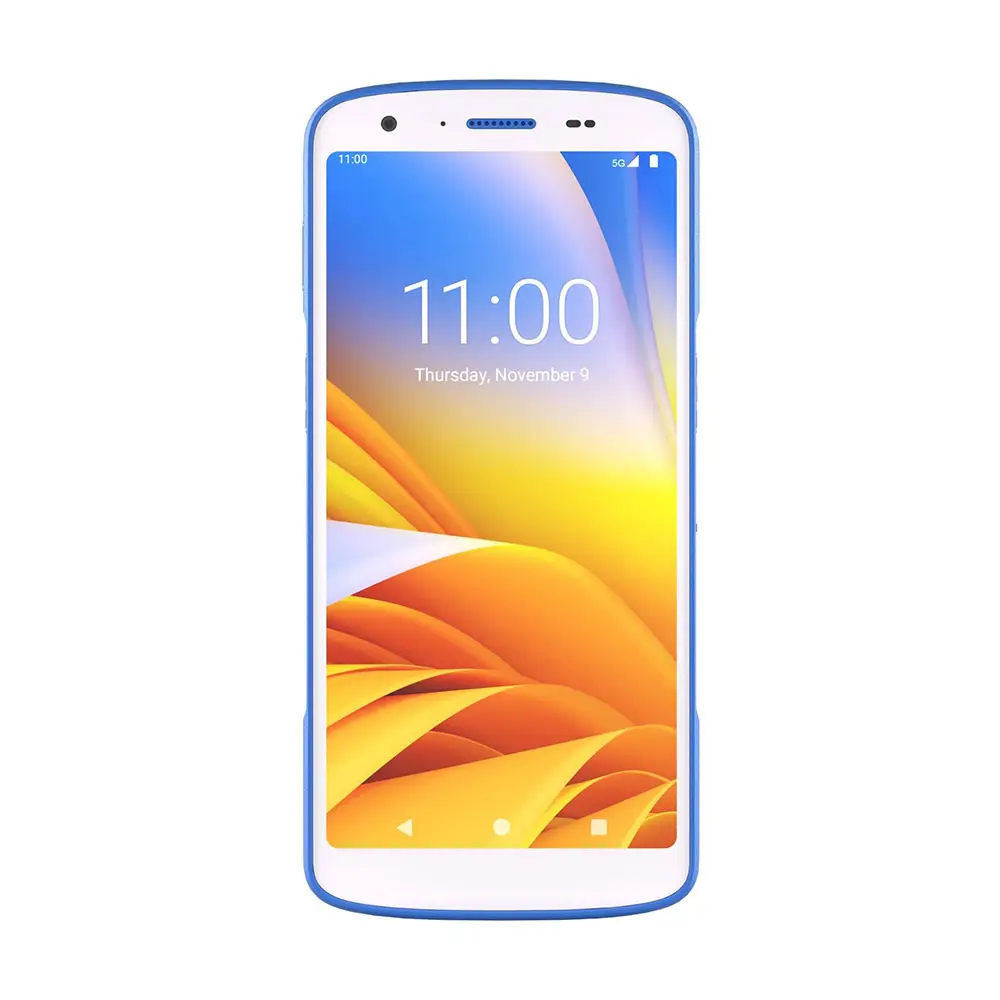
Zebra HC55 6″ mobile computer + 5G Android Fully rugged Yes Yes Community and ambulance staff on cellular, off-site
Zebra HC25 Handheld Android Semi-rugged Yes Yes Specimen and wristband scanning on a shared ward device
Zebra ET40 8″ tablet Android Fully rugged Yes No Warehouse and GDP picking in the distribution centre
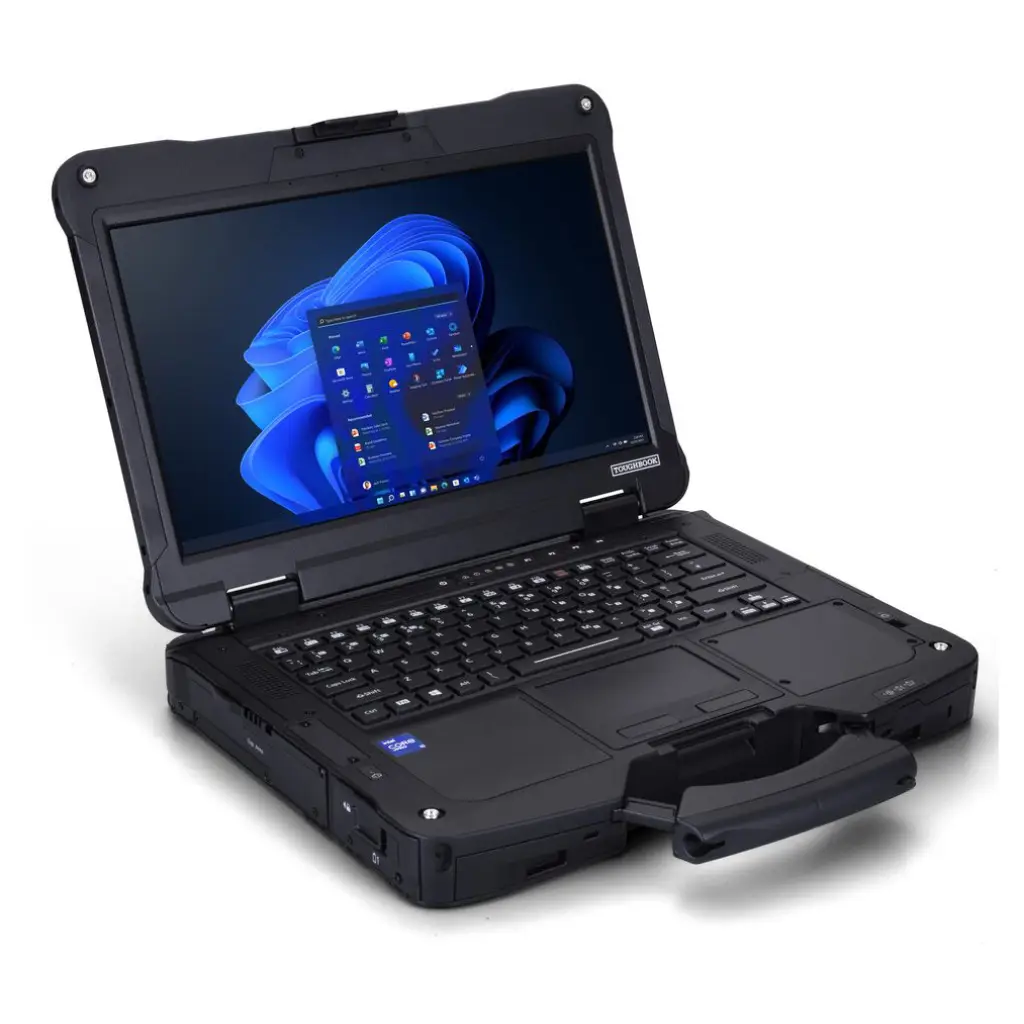
Panasonic Toughbook 40 Rugged laptop Windows Fully rugged Optional No Validation and engineering work on Windows batch systems
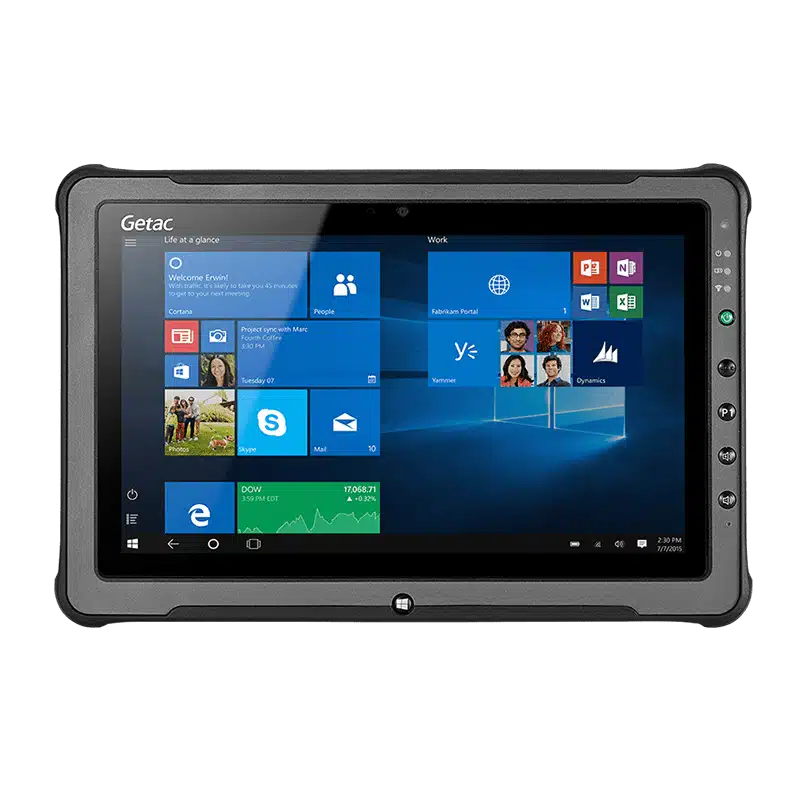
Getac F110 G6 11.6″ rugged tablet Windows Fully rugged Optional No Cleanroom and production-floor batch records, gloves on

Speccing devices for a hospital ward, pharma line or warehouse fleet?

Tell us the workflow — clinical bedside, pharma manufacturing, warehouse distribution or ambulance — and we’ll come back within 24 hours with a configuration matched to it.
The reality of the ward and the line

One device, disinfected a hundred times, zero tolerance for error

Healthcare and pharma are the two sectors where device design decisions have direct patient-safety implications. A nurse scans a patient wristband, then a medication barcode, then documents the administration — closed-loop, at the point of care, with no room for a mis-read or a missed step. A pharma production operator scans a GS1 DataMatrix on a batch record, verifies against MES, and completes a serialised release. Between every one of these interactions, the device may be wiped with a strong disinfectant, and the housing is expected to hold up to that chemical exposure for the entire 3–5 year lifecycle. Consumer hardware in this environment fails in one of two visible ways: either the plastic clouds, cracks and de-laminates from disinfectant exposure, or the battery seals fail and the device is quarantined mid-shift. Neither is acceptable when the workflow is patient-facing or GxP-controlled.

Where it works

Hospital wards and nursing stations, operating theatres and recovery, ambulance and pre-hospital care, pharma cleanrooms and packaging lines, pharma warehousing and distribution, and pharmacy dispensing. Each imposes a different combination of hygiene protocol, cleanroom class and scanning workload.

What it does

Positive patient ID and closed-loop medication administration (Epic, Cerner, Meditech, Dedalus, TrakCare); specimen and sample tracking through GS1 DataMatrix; pharma manufacturing MES/ERP data entry (Werum PAS-X, Emerson Syncade, SAP); serialised release and distribution documentation; and ambulance pre-hospital ePCR and drug-check workflows.

What breaks it

Repeated disinfection with IPA, bleach, quaternary ammonium and hydrogen peroxide — device housings not validated against these chemistries craze, cloud and de-laminate within months. Fluid ingress from spills and wash-downs, and drops onto hard theatre and ward flooring. Vibration in ambulance transport adds a further durability layer that consumer tablets are not designed for.

Why it matters

In healthcare, a scan that doesn't complete is a workaround waiting to happen, and workarounds are how five-rights medication safety breaks down. In pharma, a data-capture failure on a serialised release is a compliance issue, not just an operational one. The device is not a productivity tool — it is a controlled instrument in the patient-safety and GxP chain of custody.

From reality to requirement

What healthcare and pharma teams actually need from a device

The specifications that separate a device that survives 5 years on a ward or line from one that has to be replaced after 12 months of disinfection.

Disinfectant-ready housing — validated chemistries

The housing must be documented as compatible with the disinfectants actually used on the ward or line: IPA (70%), bleach solutions, quaternary ammonium, accelerated hydrogen peroxide, and — increasingly — chlorine dioxide wipes. Healthcare-grade Zebra HC SKUs are the reference; standard-grade equivalents will not survive.

Sealed and easy-to-clean form factor

Flush surfaces without seams or exposed screws that trap fluid and organic matter. IP54 minimum for hospital use, higher for pharma cleanroom and pre-hospital ambulance workflows.

1D and 2D imager for GS1, DataMatrix and pharma barcodes

Pharmaceutical packaging is GS1 DataMatrix; laboratory samples are often 1D linear; ward scanning includes patient wristbands with variable print quality. A 2D imager reads all of these reliably; laser scanners do not.

All-shift battery for 12-hour nursing rotations

A nursing shift runs 8–13 hours. Either the device supports hot-swap batteries or ships with a genuine 12-hour all-shift battery under continuous scan load. Battery-swap workflows also need to be validated against the ward's infection-control policy.

PPID / closed-loop medication administration workflow support

The device and its scanner need to integrate cleanly with the hospital EMR (Epic, Cerner, Meditech, Dedalus, TrakCare) and its BCMA/eMAR workflow. Zebra's Healthcare range has documented compatibility with the major EMRs; verify against the specific EMR version.

Lockable configuration and MDM compatibility

For pharma manufacturing use, the device has to slot into the environment the customer validates: locked configurations, audit-ready update history and MDM policies aligned with the Annex 11 / 21 CFR Part 11 controls the sector requires. The devices are compatible with Intune, SOTI and Zebra's own MDM tooling — the validated configuration itself is defined by the customer's quality organisation.

Speak the spec

The ratings worth writing into a healthcare or pharma requirement

DISINFECTANT-READY HOUSING

Chemical compatibility with named disinfectants

Not a marketing bullet — a documented list of chemistries (typically IPA, bleach, quaternary ammonium, accelerated hydrogen peroxide, chlorine dioxide) that the housing has been validated against. Ask for the manufacturer's disinfectant-compatibility datasheet against the specific chemistries used on the ward or line.

IP54 / IP65 / IP67

Fluid ingress protection

IP54 is the working baseline for ward and clinical use. IP65 or IP67 is preferred for pre-hospital ambulance, pharma cleanroom, and any workflow with wash-down or high-humidity exposure.

GS1 DATAMATRIX / GS1-128 BARCODE SUPPORT

Pharma and clinical barcode standards

GS1 DataMatrix is the standard for pharmaceutical packaging and increasingly for medical device UDI; GS1-128 remains common in laboratory and specimen tracking. Verify the imager reads both reliably — a 2D imager is required.

EMR / MES COMPATIBILITY

Documented integration with the target software

The device manufacturer publishes compatibility documentation against major EMRs (Epic, Cerner, Meditech) and pharma MES platforms (Werum PAS-X, Emerson Syncade). Ask for the current version list — this is one of the most common places procurement mistakes are made.

Speccing devices for a hospital ward, pharma line or warehouse fleet?

Tell us the workflow — clinical bedside, pharma manufacturing, warehouse distribution or ambulance — and we’ll come back within 24 hours with a configuration matched to it.

24-hour tailored quotes

Same-day response on standard configurations. 24–48 hours for complex builds.

Pre-configured on arrival

OS imaging, MDM enrolment, asset tagging and app pre-load, done in-house before shipping.

3-year / 2-year / 12-month warranty

3-year on new laptops and tablets, 2-year on new scanners and handheld computers, 12-month on certified pre-owned. Extended options on request.

Trade-in on old fleets

We accept end-of-life rugged hardware against new procurement and retire it responsibly.

FAQ

Common questions about rugged devices in pharma and healthcare

The Zebra HC50 is the reference PPID / closed-loop medication administration device — disinfectant-ready housing validated against IPA, bleach, quaternary ammonium and hydrogen peroxide, integrated 2D imager, and documented compatibility with major EMRs. The Zebra HC55 is the larger-screen alternative with 5G; the Zebra HC25 covers lower-intensity clinical workflows.
Yes — the healthcare-grade SKUs (HC50, HC55, HC25) have housings specifically formulated to withstand repeated exposure to hospital-grade disinfectants (IPA, bleach, quaternary ammonium, accelerated hydrogen peroxide). Standard-grade equivalents of the same devices will not — always specify the healthcare-grade variant for clinical use.
Yes. Zebra's HC range has documented compatibility with the major European EMRs and their BCMA/eMAR modules. We verify the specific EMR version against the device's current firmware and integration documentation before quoting.
The hardware can be configured to sit inside a validated environment — locked configurations, audit-ready update history and MDM policies aligned with the Annex 11 / 21 CFR Part 11 controls your quality organisation defines. Zebra ET40 tablets are commonly used in packaging and MES workstation roles on pharma sites, and the devices are compatible with Intune, SOTI and Zebra's MDM tooling. The validation and qualification of the configuration remain the customer's responsibility; we supply and pre-configure the hardware to the specification you provide.
Standard-configuration quotes are returned within one business day. Configured builds (imaging, MDM enrolment, EMR client pre-install, asset tagging) typically add 1–2 business days. In-region EU deliveries via UPS then arrive within 1–3 business days.
For clinical use (medication administration, PPID, bedside documentation), new-in-box is the default — new mobile computers and handheld scanners carry a 2-year warranty, new laptops and tablets 3 years — together with the manufacturer's disinfectant-compatibility documentation for the healthcare-grade SKU. Certified pre-owned carries a 12-month warranty and is appropriate for spares pools, training wards, and non-clinical use — asset tracking, biomed inventory, patient-transport logistics.
Yes. We support imaging, MDM enrolment (Intune, SOTI, Ivanti, VMware Workspace ONE), EMR client pre-install and asset tagging in-house before shipping. Configuration adds no more than 1–2 business days to the standard lead time.

Need 10+ Rugged Devices?

Get a custom quote from our enterprise team. Volume pricing, pre-configuration and global delivery available.

Get Started

Request Your Quote

Tell us about your devices and we’ll get back to you.