


Windows laptops for coordinators, site engineers, superintendents and QA leads running Revit, Navisworks, Bluebeam, Procore and Autodesk Build. Full keyboard, discrete or strong integrated GPU, and the port selection needed for site-office work.
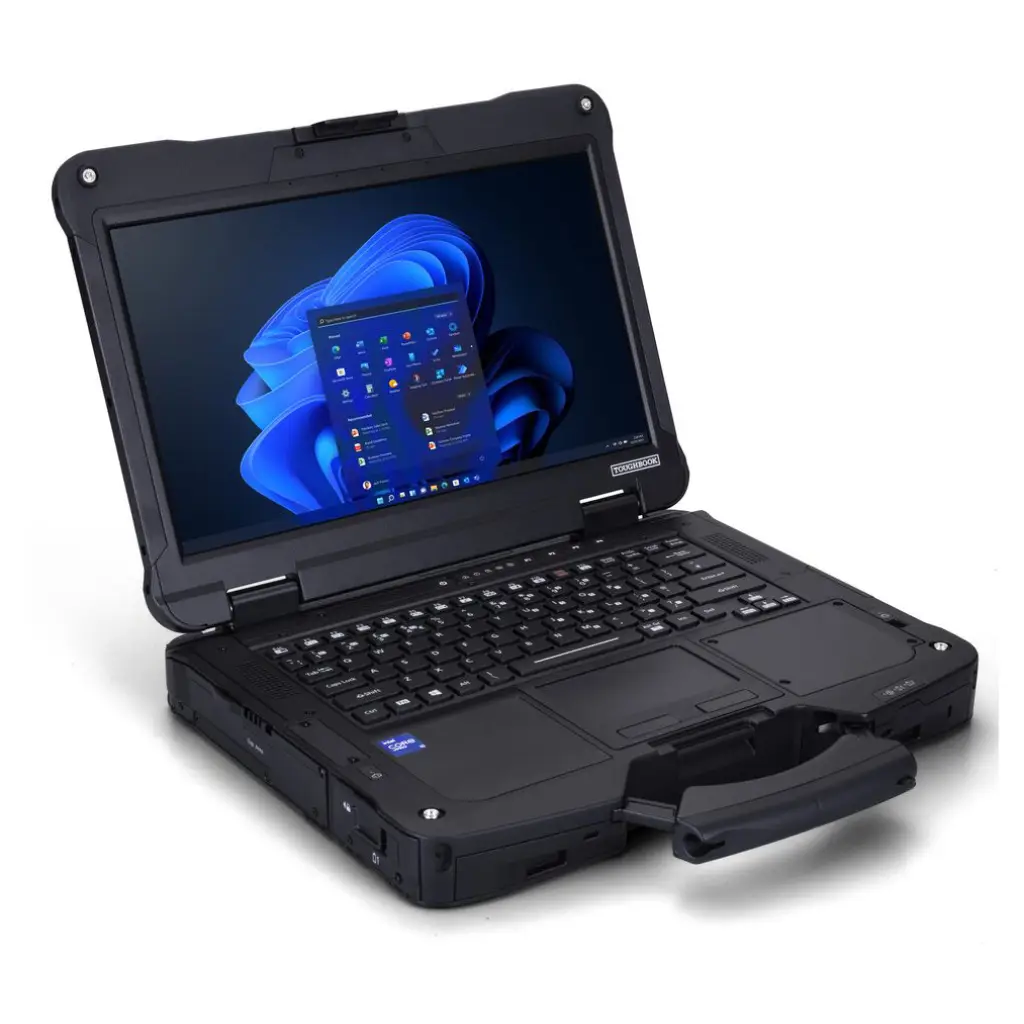
PANASONIC
Modular fully rugged laptop with user-swappable bays and hot-swap batteries. The reference specification for site engineers and superintendents running BIM and site-management software across long days on active sites.

GETAC
Semi-rugged clamshell that hits the price/durability sweet spot for site-office use. Lighter than a fully rugged Toughbook, tougher than any consumer laptop, and specified widely across European construction fleets.

DELL
Rugged Dell clamshell that drops straight into fleets already standardised on Dell / Intune. Common where central IT insists on a single OEM across the project's full device estate.
Windows tablets for outdoor use — survey, layout, punch-list QA and drawing markup on active decks and slabs. Sunlight-readable, glove-compatible and light enough to carry all day.
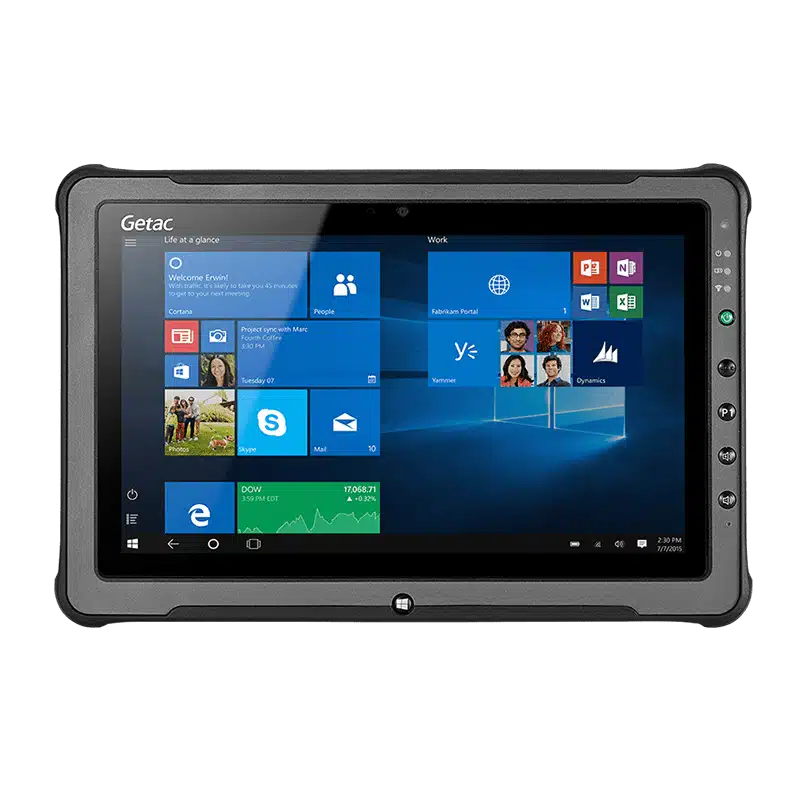
GETAC
Fully rugged 11.6″ Windows tablet with an 800-nit sunlight-readable display and glove-mode touch. The default choice for surveyors, QA engineers and snagging leads working on open decks.

DELL
12″ fully rugged Windows tablet with a detachable keyboard. A strong alternative where the fleet is Dell-standardised or where the tablet needs to double as a laptop in the site trailer.
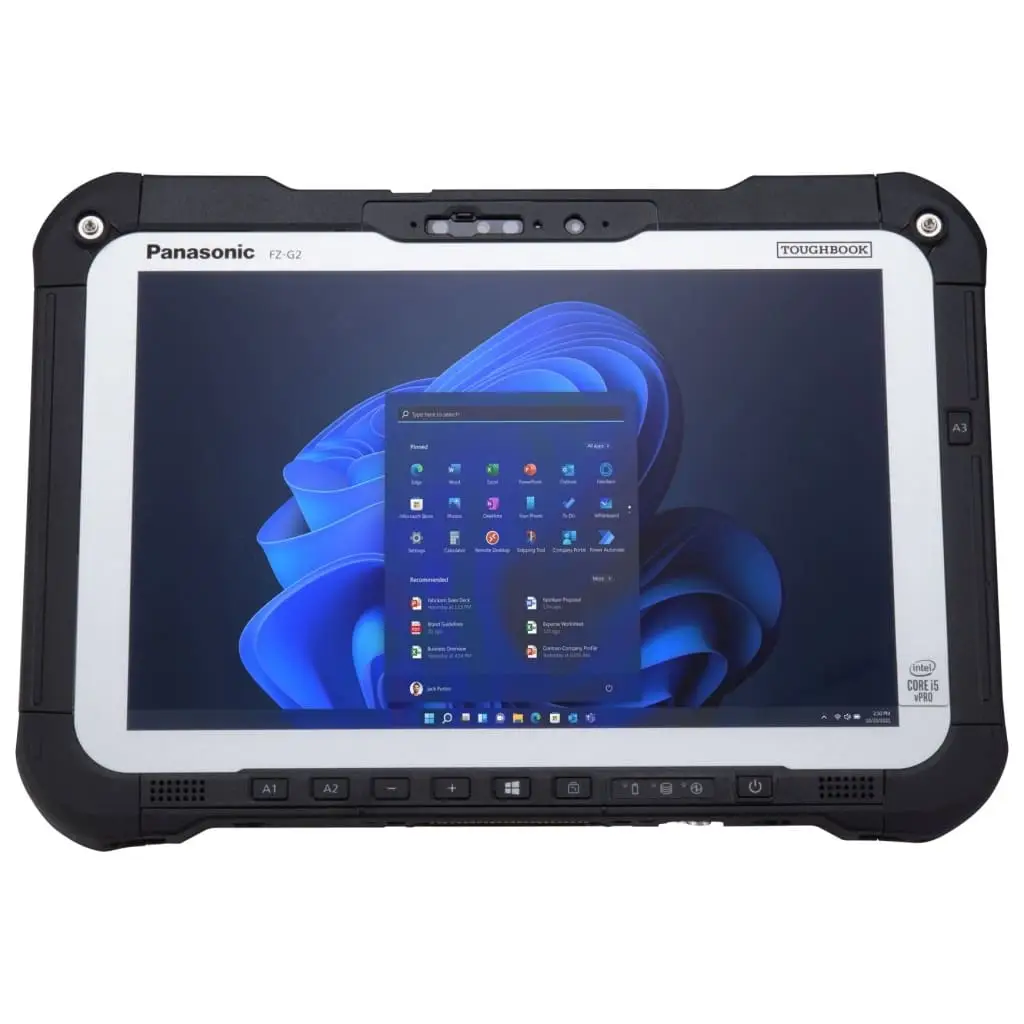
PANASONIC
10″ fully rugged Windows tablet with modular expansion, chosen where a barcode scanner, smartcard reader or extra battery needs to be added for specific site workflows.
Site trailers and Portakabin offices, active floors and slabs, scaffolds and elevated work platforms, groundworks and earthworks, MEP roughing spaces, and the truck-cab space between all of them. Each imposes a different balance of dust, moisture, temperature and connectivity — and the device rarely stays in one for long.
BIM coordination and model walkthroughs (Revit, Navisworks, Bluebeam), site management and daily reports (Procore, Autodesk Build, Fieldwire, PlanGrid), survey and layout capture, snag/punch-list QA, drawing markup and RFI capture, and cost/quantity tracking against schedule. The workload spans compute-heavy CAD-adjacent work in the trailer and light form-capture out on the deck.
Concrete and gypsum dust getting into unsealed ports and fans; drops from waist-to-shoulder height onto slab or gravel; screens that wash out under direct sun and become unreadable at the exact moment a subcontractor needs to see a drawing; batteries that lose meaningful capacity below freezing; and keyboards that die the first time coffee, rainwater or curing-compound spray reaches them. Consumer laptops in this environment usually fail within one build cycle.
A site engineer without a working device isn't just inconvenienced — they end up making decisions from paper or memory, which is where RFIs get missed and change orders get lost. The operational cost of unreliable hardware on a construction project is measured in rework and delay, not in the sticker price of the laptop or tablet.
The realistic drop height on site is waist-to-shoulder — 1.0 to 1.5 metres onto slab, gravel or scaffold. 1.2 m tested to MIL-STD-810H is the working threshold; 1.8 m gives margin for scaffold work and elevated platforms.
Concrete, gypsum and silica dust work into unsealed ports and vents over weeks, not seconds. IP65 is the working baseline; IP66 handles wind-driven rain and wash-downs at the end of a wet day. Below IP65, expect internal failure well inside the first year.
Any device used on a deck, roof or open site needs to be readable at midday. Below 800 nits, the operator tilts the screen to find shade, misreads a drawing, or gives up and reverts to paper — all of which cost time or introduce error.
Site workers wear gloves and work in rain. Verify glove-mode is switchable on the specific device and that the screen rejects false touches from water droplets — both are settings, not fixed properties, and both matter every day on site.
Winter mornings run below freezing and roof decks in summer regularly hit 40°C+ in the sun. Confirm the operating range in writing (typical rugged spec: −20°C to +60°C) — a device rated to 0°C will not reliably boot in a January site trailer.
Revit, Navisworks and Bluebeam are not lightweight — they need at least an i5 (i7 preferred), 16 GB RAM and a discrete or strong integrated GPU to walk a federated model without freezing. This rules out most low-end rugged tablets for coordinator and BIM-lead roles.
Site power is unreliable and often shared with tools. A device with a genuine 8–10 hour battery, or a hot-swappable pack (Toughbook approach), avoids the productivity loss of hunting for a working outlet in a trailer.
Site Wi-Fi rarely reaches the whole footprint, especially on greenfield builds or infrastructure work. Built-in 4G/5G with dual-SIM keeps BIM 360, Procore and Fieldwire synced without asking workers to tether to a phone.


